
Sri Aurobindo writes on Money Power and The Four Powers of the Mother (age 57-58)
“Money is a sign of universal force, and this force in its manifestation on earth works on the vital and physical planes and is indispensable to the fullness of outer life. In its origin and its true action it belongs to the Divine. But like other powers of the Divine it is delegated here and in the ignorance of the lower Nature can be usurped for the uses of the ego or held by Asuric influences and perverted to their purpose.
This is indeed one of the three forces – power, wealth, sex – that have the strongest attraction for the human ego and the Asura and are most generally misheld and misused by those who retain them.
The seekers or keepers of wealth are more often possessed rather than its possessors; few escape entirely a distorting influence stamped on it by its long seizure and perversion by the Asura.
For this reason most spiritual disciplines insist on complete self-control, detachment and renunciation of all bondage to wealth and of all personal and egoistic desire for its possession. Some even put a ban on money and riches and proclaim poverty and bareness of life as the only spiritual condition.
But this is an error; it leaves the power in the hands of the hostile forces. To reconquer it for the Divine to whom it belongs and use it divinely for the divine life is the supramental way for the Sadhaka.
You must neither turn with an ascetic shrinking from the money power, the means it gives and the object it brings, nor cherish a rajasic attachment to them or a spirit of enslaving self-indulgence in their gratifications.”
1928 – Sri Aurobindo writes “The Four Powers of the Mother” and publishes The Mother (age 56)
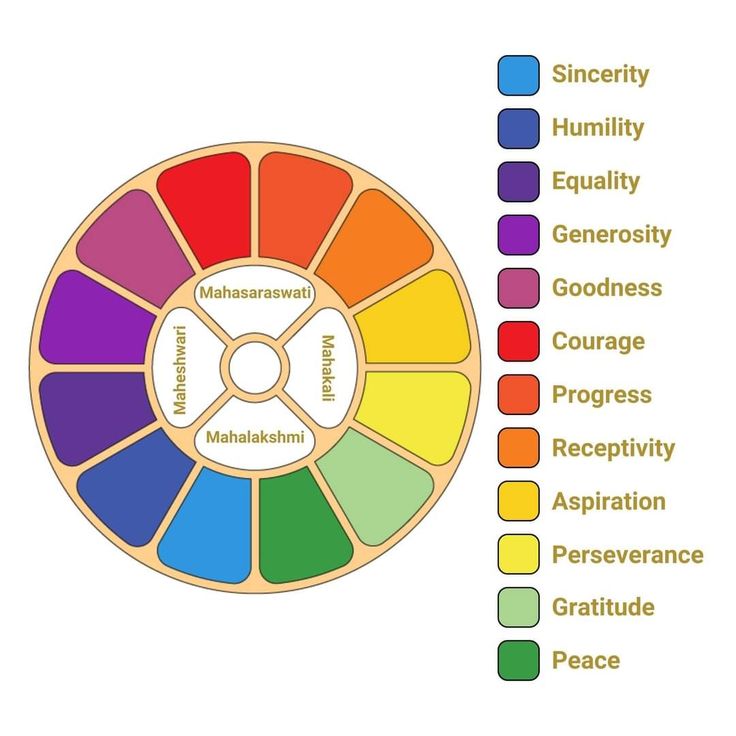
Sri Aurobindo’s withdrawal from the daily life of the community is certainly not expected by the members. What is more difficult to accept is why they could have access to Sri Aurobindo only through the Mother and why Sri Aurobindo entrusted his disciples to the Mother. These questions reached Sri Aurobindo who then chose to answer. His reply given in one stretch of writing is a classic in the English language on the Divine Mother Principle. Entitled The Four Powers of the Mother, if forms the main body of the little book, The Mother, later published in 1928 and recognized as the key to Sri Aurobindo’s yoga.
Here, Sri Aurobindo explains how there is a great Diving Shakti working in the Universe for the manifestation of the Divine. This Power streams into four main channels: The Power of Knowledge, Strength, Harmony and Beauty and Work and Service. Together they work to build the individual and the universe in the figure of the Divine Being in its fourfold manifestation. All these Divine Powers were, he explains, manifesting in the Mother who had been missioned to lay the foundations of a New Creation.
The ashram grows into a large family, with more and more seekers arriving from different parts of the country, distant lands on the globe, to participate and grow in this new mode of living, with the motto All life is Yoga. Every field of interest, every sphere of constructive life, is sought to be embraced in the spirit of God and turned into a means for individual and collective evolution of consciousness. The broad lines of sadhana are laid down: Knowledge, Love, Work. The means are taught for deepening of consciousness, enlargement of range and vision, transcendence of ego, desire and the limitations thereof. Each helped to a harmony of the faculties of mind, will, heart and life-body, with a view to developing into a channel for the manifestation of the Divine Consciousness. It is a positive endeavor, world-affirming, but with a different orientation – to realize the Kingdom of God on Earth.
1928 onward: many hours a day spent on answering queries
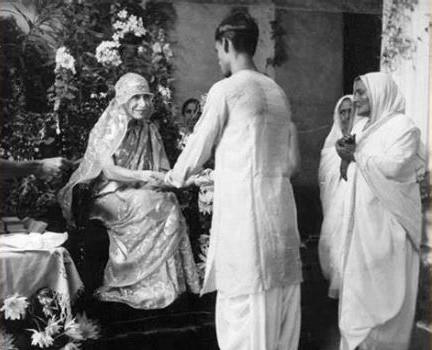
The number of ashramites increased from 25 in 1926, to 36 in 1927 and 80 in 1928. They wrote to Sri Aurobindo and the Mother of their experiences, their difficulties, on the Path. Sri Aurobindo spends hours together with the Mother answering their letters. He and the Mother would receive them on three occasion in a year: February 21, the Mother’s birthday; August 15, Sri Aurobindo’s birthday; November 24, the Siddhi day and from 1939 onwards, April 24, the day of the Mother’s final arrival. These are the days of Darshan.